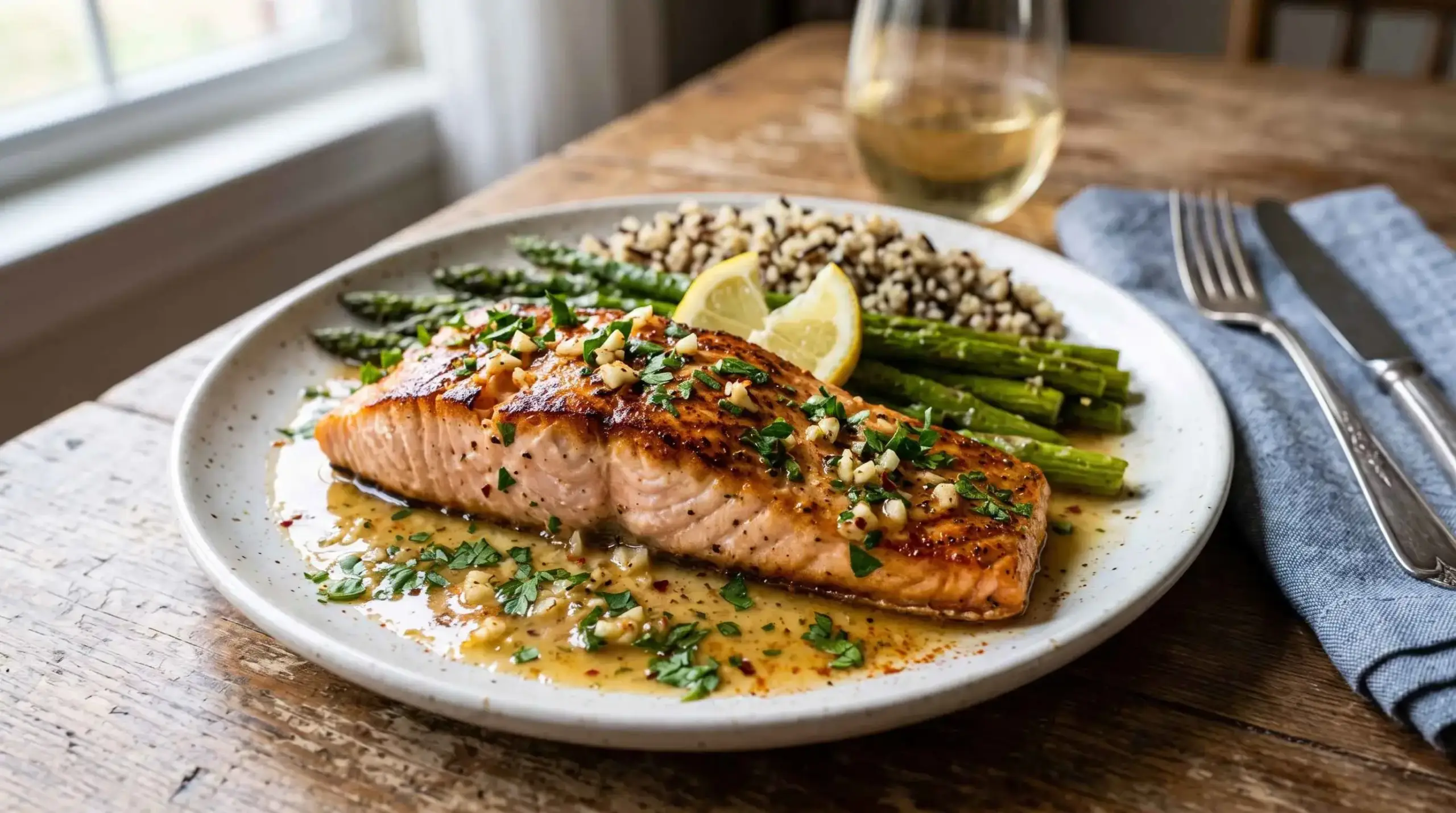
This lactose-free garlic butter salmon is an easy oven-baked dinner featuring tender salmon fillets, fresh garlic, lemon, and a flavorful lactose-free butter sauce. It takes just a few simple ingredients to create a delicious meal that works well for busy weeknights.
The salmon is baked until flaky and tender, while the garlic, lemon, and herbs create a bright, savory finish.
Table of contents
- Why You’ll Love This Lactose-Free Salmon Recipe
- Ingredients for Lactose-Free Garlic Butter Salmon
- How to Make Lactose-Free Garlic Butter Salmon
- Equipment
- Tips for the Best Lactose-Free Salmon
- Easy Variations
- What to Serve With Lactose-Free Garlic Butter Salmon
- Frequently Asked Questions
- Calories
- Recipe Notes
Why You’ll Love This Lactose-Free Salmon Recipe

Lactose-Free Garlic Butter Salmon
Ingredients
Equipment
Method
- Prepare the Oven
- Preheat your oven to 400°F (200°C).
- Line a baking sheet or baking dish with parchment paper.
- Season the Salmon
- Place the salmon fillets skin-side down on the prepared baking sheet.
- Season with paprika, salt, and black pepper.
- Make the Lactose-Free Garlic Butter
- Melt the lactose-free butter in a small bowl.
- Add the minced garlic, lemon juice, lemon zest, and dried parsley. Stir until combined.
- Coat the Salmon
- Spoon the garlic butter mixture evenly over each salmon fillet.
- Make sure the tops of the fillets are well coated so the flavors can infuse while baking.
- Bake the Salmon
- Bake for approximately 12–15 minutes, depending on the thickness of the fillets.
- The salmon should be opaque and flake easily with a fork. For precise doneness, use a food thermometer and follow the recommended temperature for salmon.
- Garnish and Serve
- Remove the salmon from the oven and sprinkle with fresh parsley.
Notes
- Use fresh salmon fillets of similar size for even cooking.
- Choose clearly labeled lactose-free butter or dairy-free butter.
- Check packaged seasonings and other ingredients for added dairy.
- Do not overbake the salmon; cooking time depends on the thickness of the fillets.
- Add fresh dill, parsley, or thyme for extra flavor
- Ready in about 25 minutes
- Made with simple ingredients
- Tender, flaky salmon with a flavorful garlic sauce
- Easy one-pan preparation
- Naturally high in protein
- Easy to pair with vegetables, rice, or potatoes
Ingredients for Lactose-Free Garlic Butter Salmon
- 4 salmon fillets, about 6 oz each
- 2 tablespoons lactose-free butter
- 3 garlic cloves, minced
- 1 tablespoon fresh lemon juice
- 1 teaspoon lemon zest
- 1 teaspoon dried parsley
- ½ teaspoon paprika
- ½ teaspoon salt
- ¼ teaspoon black pepper
- 1 tablespoon chopped fresh parsley
- Lemon wedges, for serving
How to Make Lactose-Free Garlic Butter Salmon
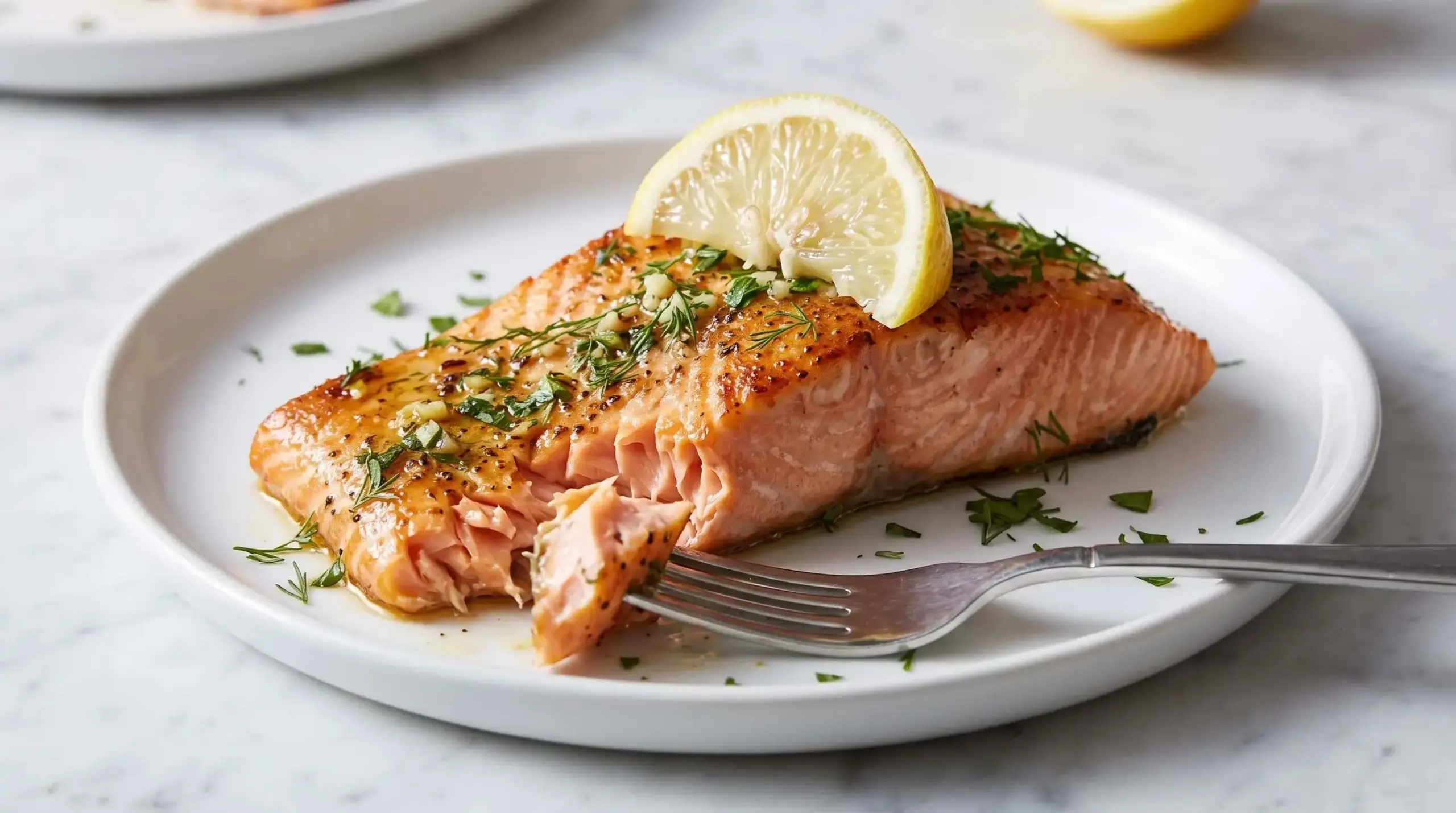
1. Prepare the Oven
Preheat your oven to 400°F (200°C).
Line a baking sheet or baking dish with parchment paper.
2. Season the Salmon
Place the salmon fillets skin-side down on the prepared baking sheet.
Season with paprika, salt, and black pepper.
3. Make the Lactose-Free Garlic Butter
Melt the lactose-free butter in a small bowl.
Add the minced garlic, lemon juice, lemon zest, and dried parsley. Stir until combined.
4. Coat the Salmon
Spoon the garlic butter mixture evenly over each salmon fillet.
Make sure the tops of the fillets are well coated so the flavors can infuse while baking.
5. Bake the Salmon
Bake for approximately 12–15 minutes, depending on the thickness of the fillets.
The salmon should be opaque and flake easily with a fork. For precise doneness, use a food thermometer and follow the recommended temperature for salmon.
6. Garnish and Serve
Remove the salmon from the oven and sprinkle with fresh parsley.
Serve immediately with lemon wedges and your favorite side dishes.
Equipment
- Baking sheet or baking dish
- Parchment paper
- Small mixing bowl
- Measuring spoons
- Pastry brush or spoon
- Chef’s knife
- Cutting board
Tips for the Best Lactose-Free Salmon
Choose evenly sized fillets. Similar-sized pieces will cook more consistently.
Don’t overbake the salmon. Cooking time depends on the thickness of the fillets, so begin checking toward the lower end of the recommended cooking time.
Use fresh garlic. Freshly minced garlic gives the butter sauce a much stronger flavor than garlic powder.
Check your butter label. Use a clearly labeled lactose-free butter or an appropriate dairy-free butter alternative.
Easy Variations
Lemon Herb Salmon
Add fresh dill, thyme, or rosemary to the garlic butter mixture.
Spicy Garlic Salmon
Add red pepper flakes or a pinch of cayenne pepper for extra heat.
Honey Garlic Salmon
Add a small amount of honey to the sauce for a sweet and savory variation.
Garlic Parmesan Salmon
For a cheesy variation, sprinkle lactose-free Parmesan over the salmon during the final few minutes of baking.
What to Serve With Lactose-Free Garlic Butter Salmon
Serve the salmon with roasted broccoli, asparagus, green beans, rice, quinoa, or roasted potatoes.
A simple green salad with lemon dressing also pairs well with the rich garlic butter sauce.
Frequently Asked Questions
Is salmon naturally lactose-free?
Yes. Plain salmon does not naturally contain lactose. However, sauces, marinades, and other ingredients added to a salmon recipe can contain dairy or lactose.
Can I use dairy-free butter?
Yes. A dairy-free butter alternative can be substituted for lactose-free butter. Choose an unsweetened option with a flavor suitable for cooking.
Can I make this salmon recipe without butter?
Yes. Replace the butter with olive oil for a lighter garlic and lemon sauce.
How do I know when salmon is cooked?
The salmon should become opaque and flake easily with a fork. Cooking time varies according to the thickness of the fillets.
Calories
Approximately 410 calories per serving, depending on the size of the salmon fillets and the type of lactose-free butter used.
Recipe Notes
- Use fresh salmon fillets for the best texture.
- Check the butter and any packaged seasonings to ensure they are lactose-free.
- Adjust the garlic and lemon to your preferred flavor.
- Add red pepper flakes for a spicy variation.
- Leftover salmon can be refrigerated in an airtight container and used in salads, rice bowls, or wraps.
- Serve with lemon wedges for extra freshness.


0 Comments
Be the first to comment.